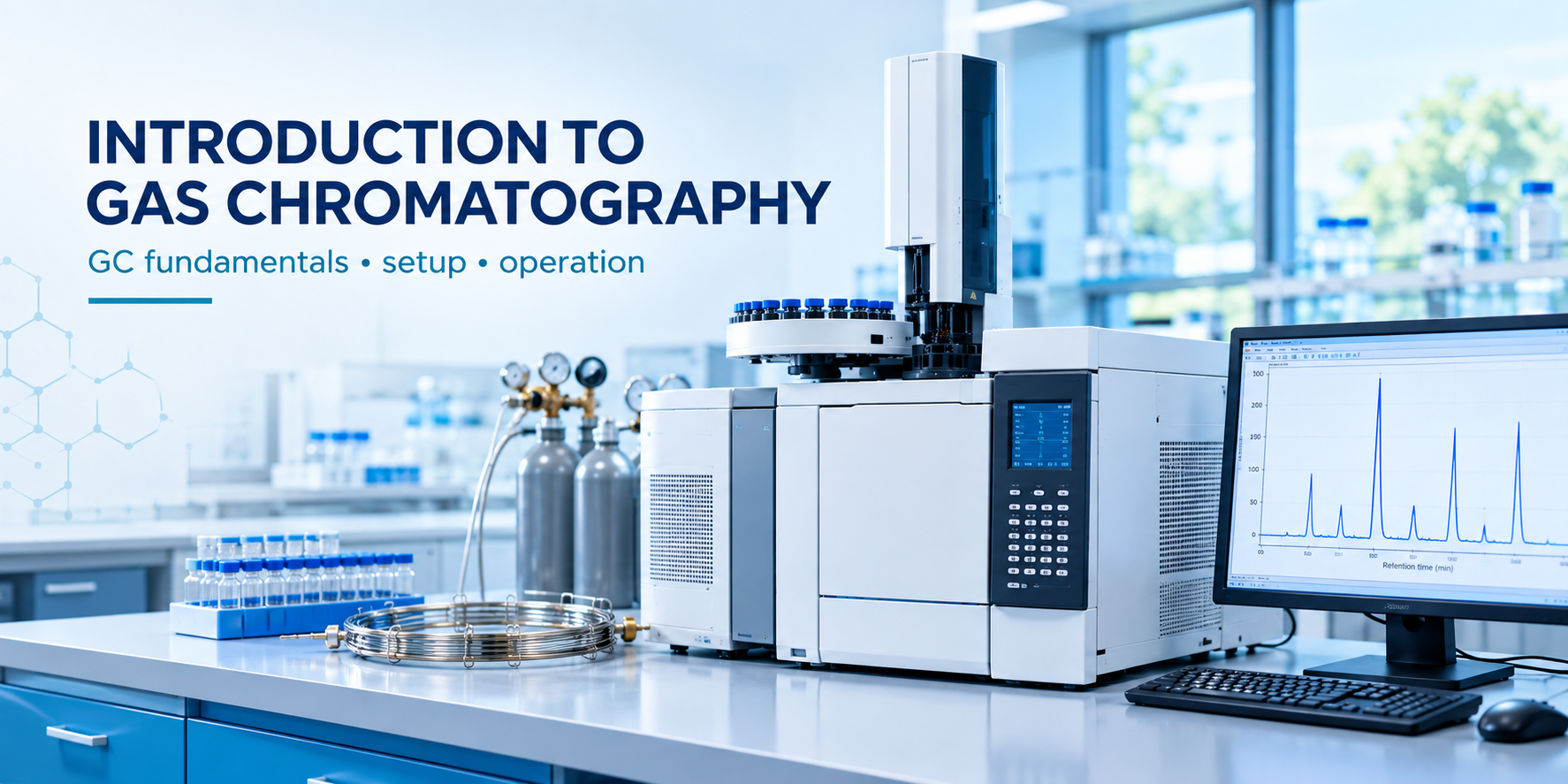
Course information
INTRODUCTION TO GC
A practical, step-by-step introduction to GC — from system setup and sample injection through separation, detection and data interpretation.
AUDIENCE: GC Novices · LEVEL: Beginner · TRAINING TYPE: Live Online Interactive Session
Gas chromatography is widely used for the analysis and separation of volatile and semi-volatile compounds. This course provides a structured introduction to GC principles, instrumentation and operation, giving new users the foundation they need to understand and operate a GC system effectively.
The course covers the major GC components in sequence, including gas supply and flow control, injection systems, inlets, columns, temperature programming, detectors and data processing.
No prior GC knowledge is required. A basic understanding of chemistry is helpful but not essential.
WHO IS THIS COURSE FOR?
This course is designed for:
- Anyone new to gas chromatography
- Professionals early in their GC career
- Laboratory technicians
- Laboratory analysts
- Students seeking a solid foundation in GC
- New GC users who want a structured understanding of instrument operation
WHAT YOU WILL LEARN
By the end of the course, participants will understand:
- The principles and applications of gas chromatography.
- How to prepare samples appropriately for GC analysis.
- The major components of a GC system and their functions.
- How carrier gases and flow control affect chromatographic performance.
- Different sample-introduction and injection techniques.
- How to select and optimise GC columns and temperature programs.
- The principles and applications of common GC detectors.
- Basic GC setup, start-up, operation and troubleshooting.
- Fundamental approaches to chromatogram integration and calibration.
- The basics of system suitability testing.
🔬 INTRODUCTION TO GAS CHROMATOGRAPHY AND ITS APPLICATIONS
The course begins with the fundamentals of GC and how the technique is applied in analytical laboratories.
Topics include:
- Principles of Gas Chromatography
- Advantages and limitations of GC
- Common applications across different industries
🧪 SAMPLE PREPARATION FOR GC ANALYSIS
Good chromatographic results begin with appropriate sample preparation.
Participants will explore:
- Importance of proper sample preparation
- Sample clean-up techniques
- Analyte extraction methods
- Solvent selection and compatibility
⚙️ GC INSTRUMENTATION AND COMPONENTS
Participants are introduced to the major components of a GC system and how they work together.
The Chromatographic Process
Key chromatographic concepts include:
- Capacity factor
- Selectivity
- Efficiency
- Resolution
Gas Supply and Flow Control
The course covers:
- Types of carrier gases
- Gas cylinders versus gas generators
- Gas purity and traps
- Flow-rate optimisation
- Electronic Pneumatic Controllers (EPC)
- Constant-flow versus constant-pressure operation
Autosampler and Injection Systems
Topics include:
- Syringes and injection techniques
- Injection programs
- Wash programs
Inlet Systems
Participants examine:
- Split and splitless sample introduction
- Liner selection and maintenance
- Alternative injection techniques
Column Selection and Optimisation
The course introduces the factors that influence GC column performance.
- Column dimensions and chemistries
- Ferrules and column protection
- Temperature programming
- Temperature-program optimisation
Detectors and Detection Techniques
Common GC detection systems covered include:
- Flame Ionization Detector (FID)
- Electron Capture Detector (ECD)
- Thermal Conductivity Detector (TCD)
- Other common detectors and their applications
🛠️ INSTRUMENT SETUP AND OPERATION
Participants are guided through the fundamental steps involved in preparing and operating a GC system.
- GC setup procedures
- Start-up procedures
- Common problems
- Basic troubleshooting
📊 DATA PROCESSING AND SYSTEM SUITABILITY
The course introduces the fundamentals of turning chromatographic output into useful analytical information.
Topics include:
- Chromatographic integration
- Calibration techniques
- Introduction to system suitability testing
💻 ONLINE PRACTICAL COMPONENT
The online session includes interactive practical activities designed to reinforce the theoretical material.
Participants will work through:
- Virtual walkthrough of GC setup and method parameters
- Interactive exercises involving inlet, column and detector selection
- Basic chromatogram interpretation
🗣️ Q&A AND CLOSING DISCUSSION
The course concludes with:
- Summary of key concepts
- Open discussion of challenges encountered in GC and its applications
- Resources for further learning
COURSE TAKEAWAYS
Participants will finish with a clear working foundation in gas chromatography, including an understanding of the instrument's major components, sample introduction, carrier-gas management, column selection, temperature programming, detection, basic troubleshooting and chromatographic data processing.
The goal is to give new GC users the practical foundation needed to approach GC analysis with confidence and a clear understanding of how the system works.