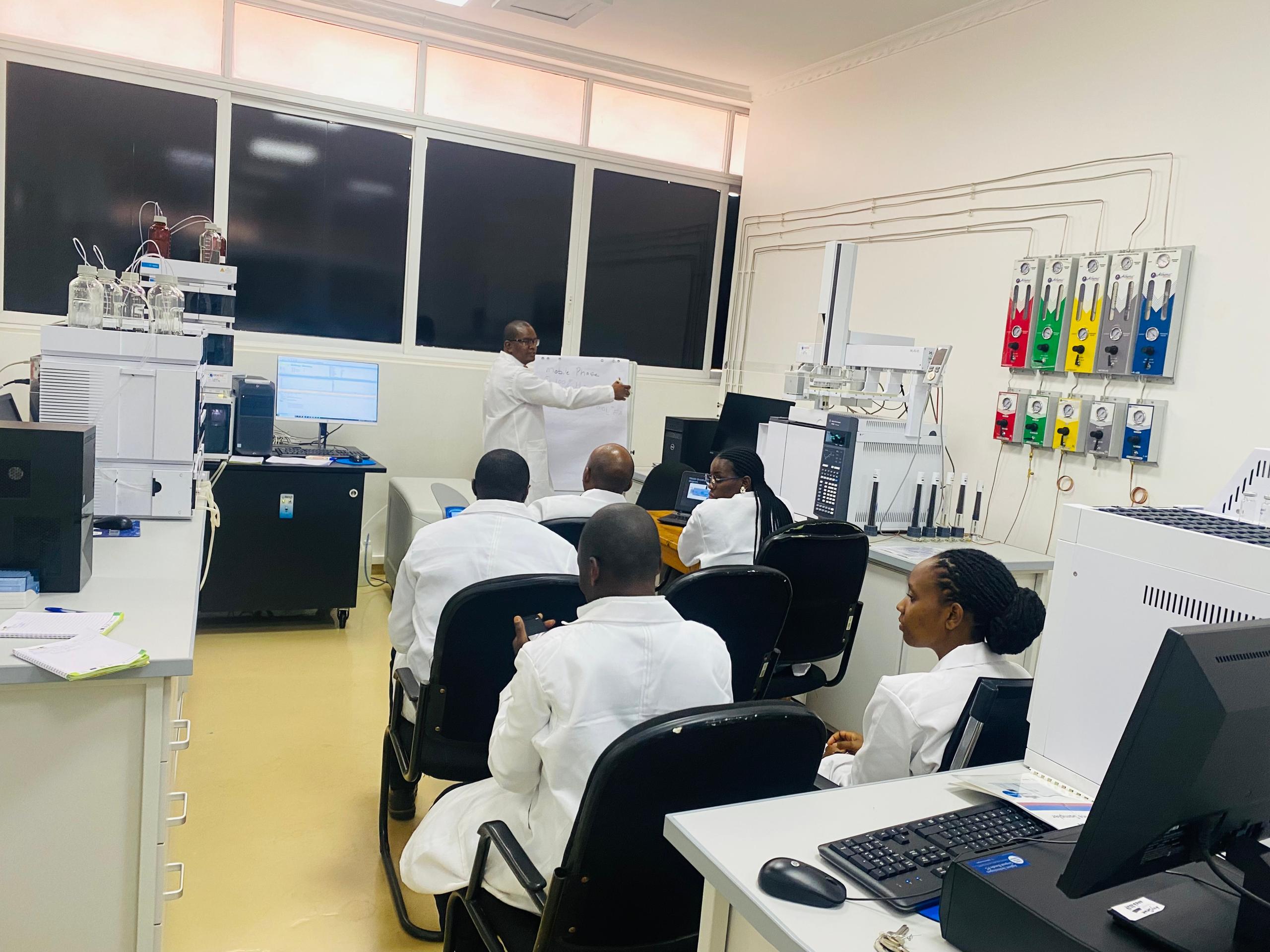
Course information
GC-MS Applications, Troubleshooting & Method Development
Develop robust, quantitative GC-MS methods and master systematic diagnostic frameworks for complex sample analysis.
AUDIENCE: ANALYTICAL CHEMISTS & GC-MS OPERATORS · LEVEL: ADVANCED · TRAINING TYPE: LIVE ONLINE INTERACTIVE SESSION
Gas Chromatography-Mass Spectrometry is an indispensable tool for environmental analysis, food safety testing, pharmaceutical characterization, and forensic science. Achieving reliable, low-level quantitation while maintaining system uptime requires a combined mastery of sample preparation, mass spectral interpretation, method parameters, and preventative hardware maintenance.
This course bridges the gap between theoretical mass spectrometry and daily laboratory execution, equipping analysts with actionable strategies to design, validate, and troubleshoot complex GC-MS assays.
Systematic parameter design and targeted maintenance turn complex mass spectral data into actionable analytical results.
WHO IS THIS COURSE FOR?
Analytical scientists developing target compound quantitation methods on GC-MS platforms
Quality control and research laboratory analysts facing persistent baseline noise or matrix interferences
Laboratory managers seeking to standardize GC-MS operating procedures and reduce unplanned downtime
WHAT YOU WILL LEARN
Design robust GC-MS analytical methods aligned with regulatory and laboratory objectives.
Apply advanced sample preparation workflows tailored for trace-level target compounds.
Optimize acquisition modes including Full Scan and Selected Ion Monitoring (SIM).
Troubleshoot mass spectrometer hardware, vacuum systems, baseline noise, and peak tailing.
Perform quantitative mass spectral evaluations and library search matches.
🔬 REAL-WORLD GC-MS APPLICATIONS
Overview of Key Applications: Environmental, Food Safety, Forensics, and Pharmaceuticals
Matrix Considerations and Sample Clean-Up Workflows (QuEChERS, SPE, SPME)
Analyte Volatility, Thermal Stability, and Derivatization Strategies
⚙️ METHOD DEVELOPMENT & ACQUISITION OPTIMIZATION
Setting Up Analytical Parameters: Column Selection, Temperature Programs, and Carrier Gas Flow
Electron Ionization (EI) vs. Chemical Ionization (CI) Selection Criteria
Full Scan for Identification vs. Selected Ion Monitoring (SIM) for High-Sensitivity Quantitation
Establishing Dwell Times, Quantifier/Qualifier Ion Selection, and Calibration Curves
🛠️ SYSTEMATIC TROUBLESHOOTING & DIAGNOSTICS
Vacuum System Health: Monitoring Foreline Pressure, High Vacuum, and Air/Water Check Ratios
Identifying System Leaks: $m/z$ 18 (Water), $m/z$ 28 (Nitrogen), and $m/z$ 32 (Oxygen) Signals
Diagnosing Spectral Anomalies: Column Bleed ($m/z$ 207, 281), Background Noise, and Peak Tailing
Ion Source Maintenance: Filaments, Lens Assembly Cleaning, and Autotune Evaluation
📈 DATA PROCESSING & VALIDATION
Peak Integration Parameters and Baseline Adjustments
Spectral Library Searching (NIST/Wiley) and Match Quality Scoring
System Suitability Benchmarks and Quality Control Criteria
PRACTICAL APPLICATION
Includes hands-on case studies evaluating autotune reports, step-by-step air/water leak detection workflows, SIM ion choice optimization exercises, and application-specific method setups.
COURSE TAKEAWAYS
Participants leave with a comprehensive methodology to construct reliable GC-MS assays, quickly diagnose system air leaks or hardware faults, and consistently achieve accurate quantitative data.